







The Threat of Old Batteries to an RC Plane
Posted: 1/27/26
Reviving an Old Gem; How to Address the Lurking Threat Old Batteries Pose to Your Aging Models
Many of us have favorite old RC models hanging that haven’t been flown in many years, or we find a ready-to-fly gem at a swap meet, estate sale, garage sale or on marketplace. Sometimes the fuel systems need attention to run, sometimes they fire up without problems, but it’s also critical to do a deeper round of testing before hitting an old receiver battery with a charge and committing the model to flight.
Crashing A Garage Sale Find
I learned my lesson the hard way, by losing a good model. I found an ideal 40-sized Sunday flyer with a Magnum 0.52 cu inch four-stroke engine for $50 at a garage sale, I couldn’t pass it up! This airplane came with servos and a switch, and I grabbed an old 5 cell NiMH receiver battery from my bin of parts which was still new in the package but had been sitting for many years. I charged it up, it had voltage, and I proceeded to fly! But halfway into my flight it signed off with no control at mid throttle and buried itself into the ground. The battery was sitting at about 2.5 volts, quickly showing me why it lost control. Later investigation and testing taught me this important lesson:
Never trust old RC batteries for receiver power without thorough testing!
Testing Old RC Batteries
If you do want to test an old RC battery to see if it’s safe to use, the key is testing for capacity under a load and not just peeking at the voltage. If you charge an older battery that is not working well, many of them will still come up to a normal operating voltage and trigger a peak detection on the charger, causing the charger to indicate the charge is complete. If the battery is not healthy, this is called a false peak. Unfortunately, the charger won’t know it false peaked, but the amount of capacity it put into your battery is a likely clue. If your battery is not accepting near full capacity during a full charge, there is something wrong. Use your charger’s discharge function to test how much capacity the battery will deliver. Many chargers will let you set the discharge rate and minimum voltage so you can safely discharge the cells. Discharge NiCad and NiMH cells to 0.9 volts per cell. If you charge a NiMH that has been sitting for a long time with a peak detection charger, it will likely false peak and hold very little capacity. It is common for NiMH cells to take a few charge/discharge cycles to start working normally if they have been sitting for months or years. You may need to cycle a NiMH battery six to ten times if it’s been sitting for a long time, but if the battery capacity improves with every charge/discharge cycle and eventually delivers it’s rated capacity, you are in a much better scenario than where you started, and the old RC battery will likely be okay. If the battery never increases how much capacity it stores with a few charge/discharge cycles and isn’t near the rated capacity, it’s time to send it to your local designated battery disposal location.
Helping Diagnose a Gas Engine Problem
I recently attended a local fun fly and was watching a flyer with a gorgeous scratch-built Ercoupe that was running great for one flight and then would begin to sputter. He had already replaced the carb and didn’t find it made much of an improvement. He was running it up on the ground and everything seemed fine but when he went for his takeoff it started to sputter on the climb out. It immediately smoothed out when he backed off the throttle and he made a safe landing. When I spoke with him, he told me the airplane had been hanging in his garage for years and he had recently pulled it down, charged it up and began trying to fly it again when it had this problem. He would charge it up and never have a problem on the first flight, but part way into the second flight it would start misfiring. That made it click for me, I bet these were old NiMH batteries doing the same thing as the receiver batteries had done. Full throttle had the highest load on the battery, so as the battery started to fail that is where he started to experience the failures, he was lucky the engine didn’t die on him, because even though it was a huge battery and should have been fine the ignition battery was almost dead!

Selecting New RC Batteries
In most cases the best bet today for receiver power is to update to a LiFe battery. These batteries offer many benefits over NiCad/NiMH or LiPo, for many applications. Most older servos were rated to operate on 5 cell NiCad/NiMH (approximately 1.5V per cell peak voltage), but the voltage for a 2 cell LiPo is a bit too high (4.2V per cell peak voltage). The LiFe batteries are just a bit lower voltage (3.65V per cell peak voltage), so a 2 cell LiFe is usually acceptable for an older radio system (or ignition). LiPo batteries must also be removed from the model for safe charging, so even if you have high voltage capable radio gear, a LiFe battery is a great option. LiFe batteries have much better energy density than a NiCad/NiMH, so making the change to LiFe can both reduce the weight and increase the capacity! One of the biggest impacts these batteries can have is at the small end; tiny .049 – .10 sized airplanes come alive with less weight and fly better than ever!
Consider the Following LiFe RC Battery Options to Refurbish Your Old Models or for Your Next Build:
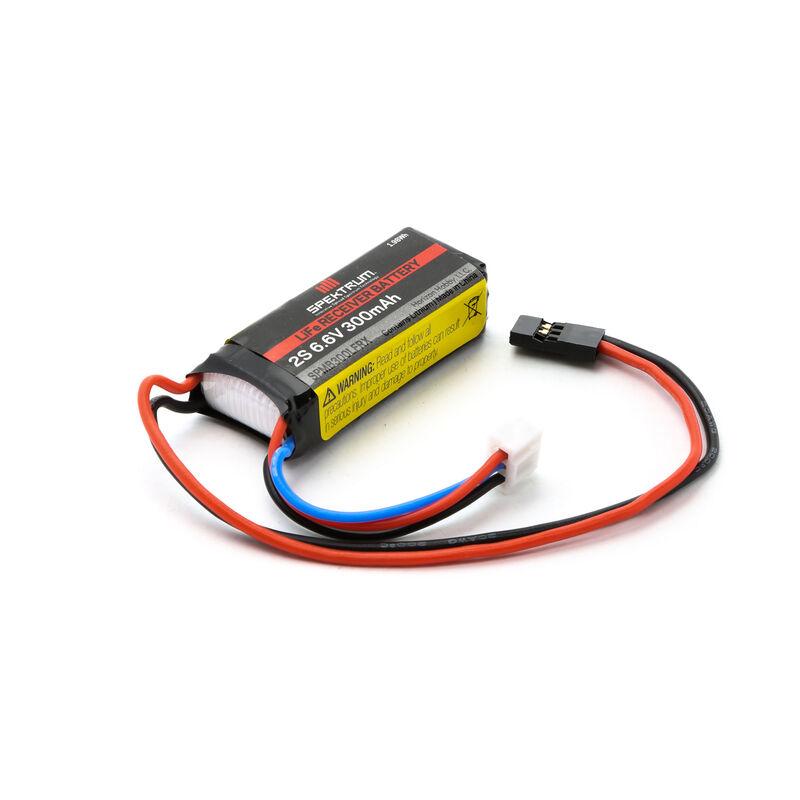
The 6.6V 300mAh 2S pack LiFe Receiver Battery SPMB300LFRX opens up a whole new world for 1/2a airplanes! At only 24g it changes the formula for small models. | |
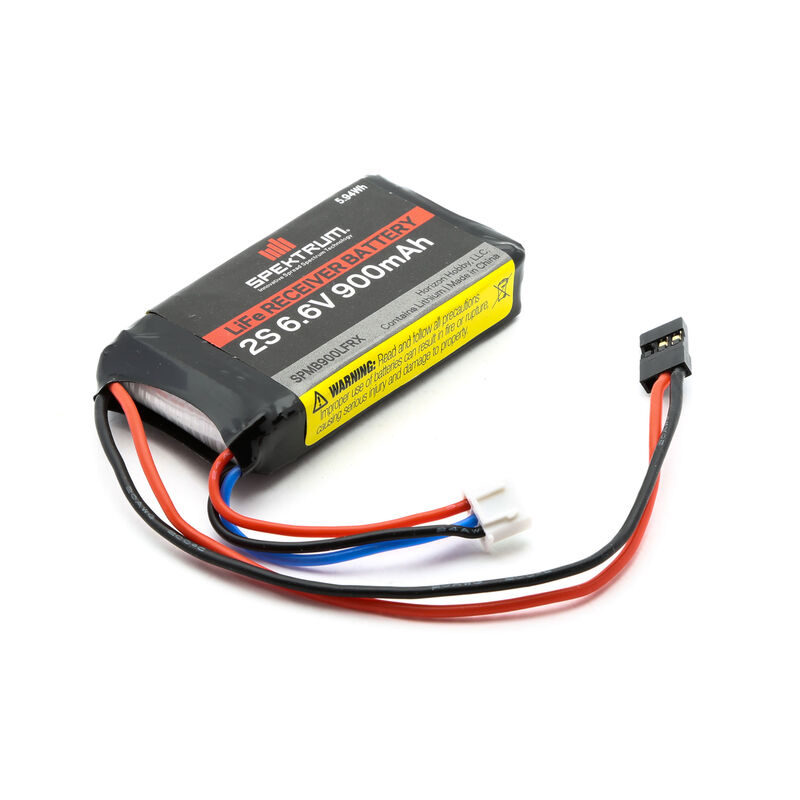 | The 6.6V 900mAh 2S pack LiFe Receiver Battery SPMB900LFRX is great for .15 to .30 sized models. |
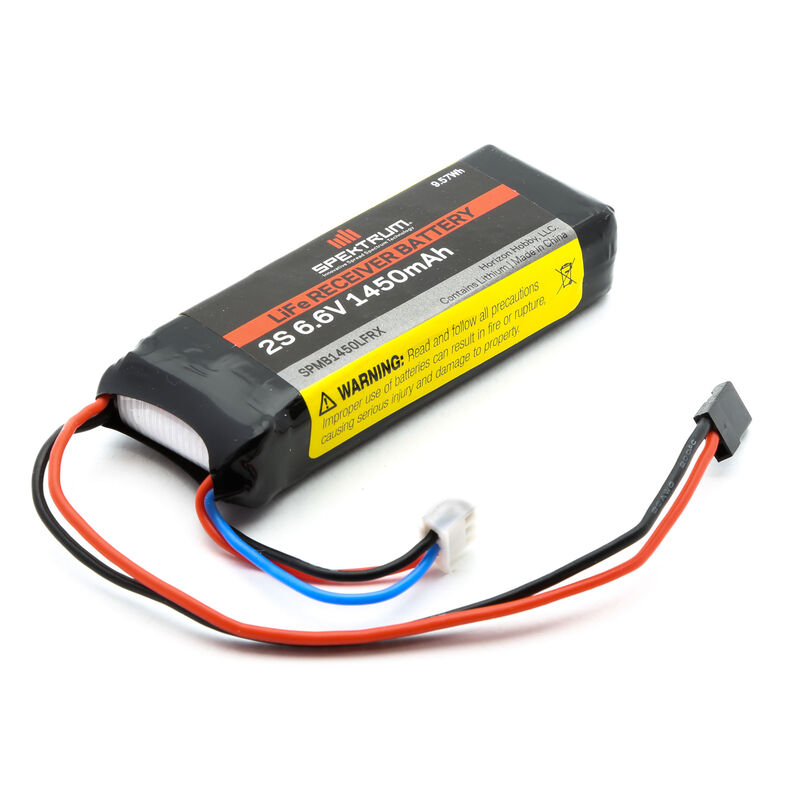 | The 6.6V 1450mAh 2S pack LiFe Receiver Battery SPMB1450LFRX is perfect for .40 sized models. |
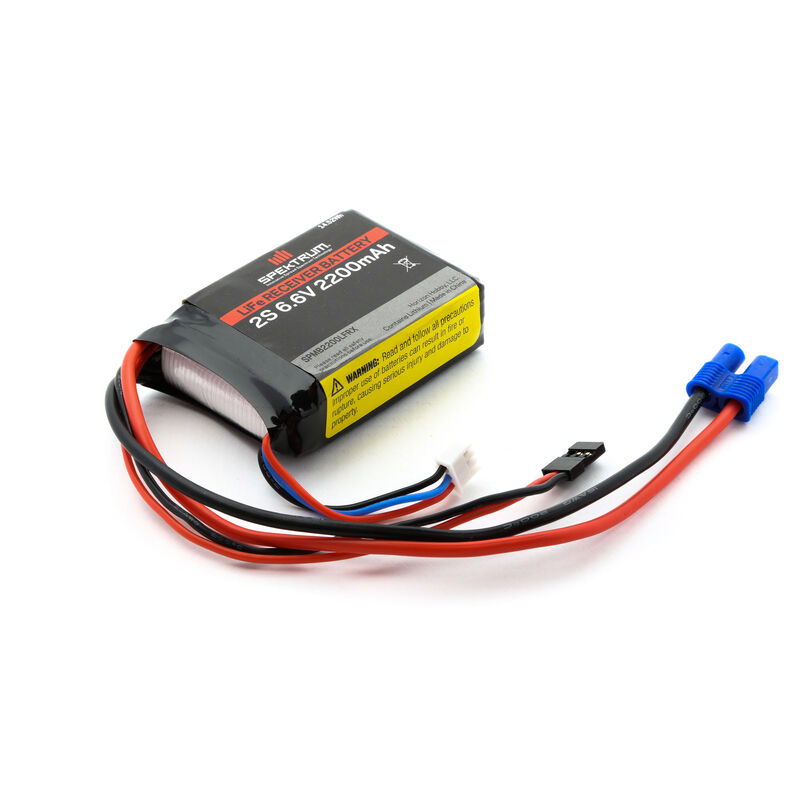 | The 6.6V 2200mAh 2S pack LiFe Receiver Battery SPMB2200LFRX is large enough to support up to .90 sized (15cc) models or spark ignition systems. These battery packs offer a both receiver connector and an EC3 with a square form factor. |
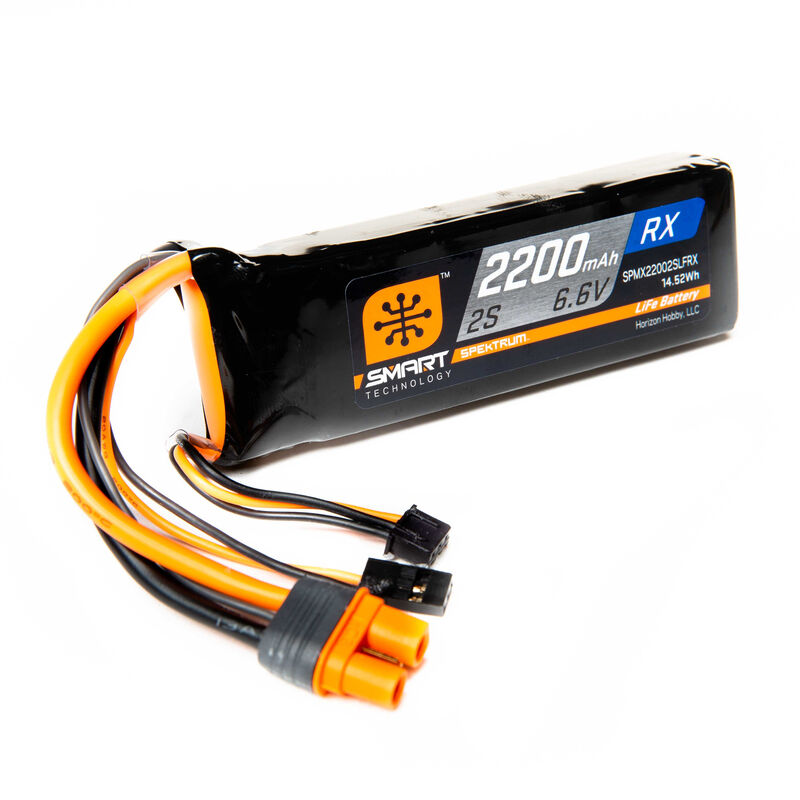 | The 6.6V 2200mAh 2S pack LiFe Receiver Battery SPMX22002SLFRX adds Smart features with an IC3 connector and comes in a long and skinny form factor. Two of this size pack is large enough to fly larger models with redundant battery configurations (Spektrum PowerSafe receivers, for example). |
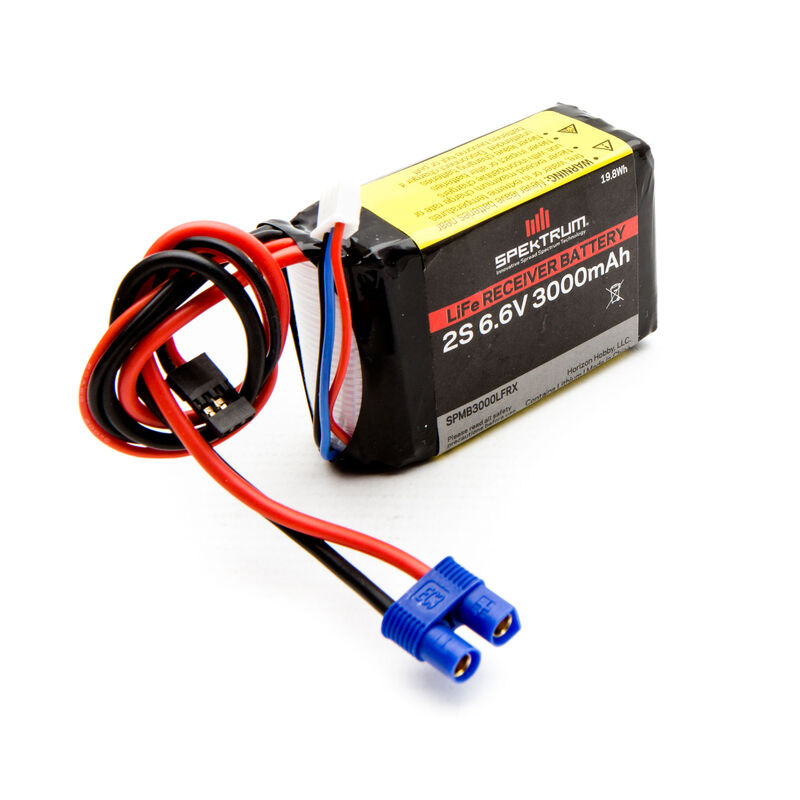 | The 6.6V 3000mAh 2S pack LiFe Receiver Battery SPMB3000LFRX offers increased capacity in a square form factor for 1.20 sized (20cc) or larger models or ignition systems. |
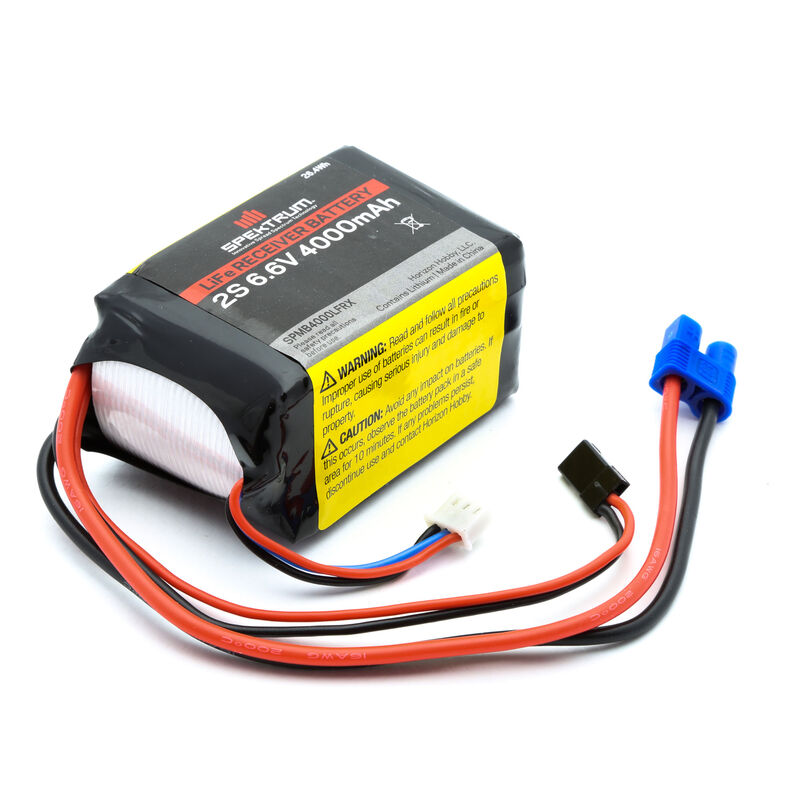 | The 4000mAh SPMB4000LFRX also offers increased capacity in a square form factor for 1.20 sized (20cc) or larger models or ignition systems. These packs offer both a receiver connector and an EC3 battery connector. |

Shop the Story

Aaron Shell
Aaron Shell is a lifelong hobbyist who started building and flying models when he was five. He found a career in the hobby starting with hobby shops, then magazines, and finally started working for Horizon Hobby in 2012. He has built and flown models of most aircraft types from sailplanes to seaplanes, and has been a Horizon Team member since 2015, getting to share the hobby with his son, Zephyr.
Related Articles

Acronyms and Assembling of RC Airplanes: From Kits to RTF
There are many acronyms in RC aviation, including the ones that signify how much assembly will be required for your RC airplane. We'll explain everything from RC airplane Kits to RTF here.
Learn More

Brushless vs. Brushed Motors: Which is Right for Your RC Vehicle?
These tips will help you decide whether a brushed or brushless motor is best for your RC car or truck.
Learn More

Does SAFE Work on All RC Airplanes?
Dive into the technology behind Spektrum SAFE and find out if SAFE works in all RC airplanes.
Learn More